

17-02-2026, 04:09 PM
This thread starts with our last club meeting. Lloyd takes home bags of stock books from Roy to puruse at home. He noticed something in one book that he thought I would like:
I don’t have a huge collection of these stamps yet, and it is always exciting to find an intact sheet! These are my first from South Africa, and Roy made them highly affordable.
Then Tony gave me a bag of slogan cancels, because he remembers me talking about them. It was a lovely selection that included these:
And then I was gifted a cover for Valentines, with this lovely fellow on the back:
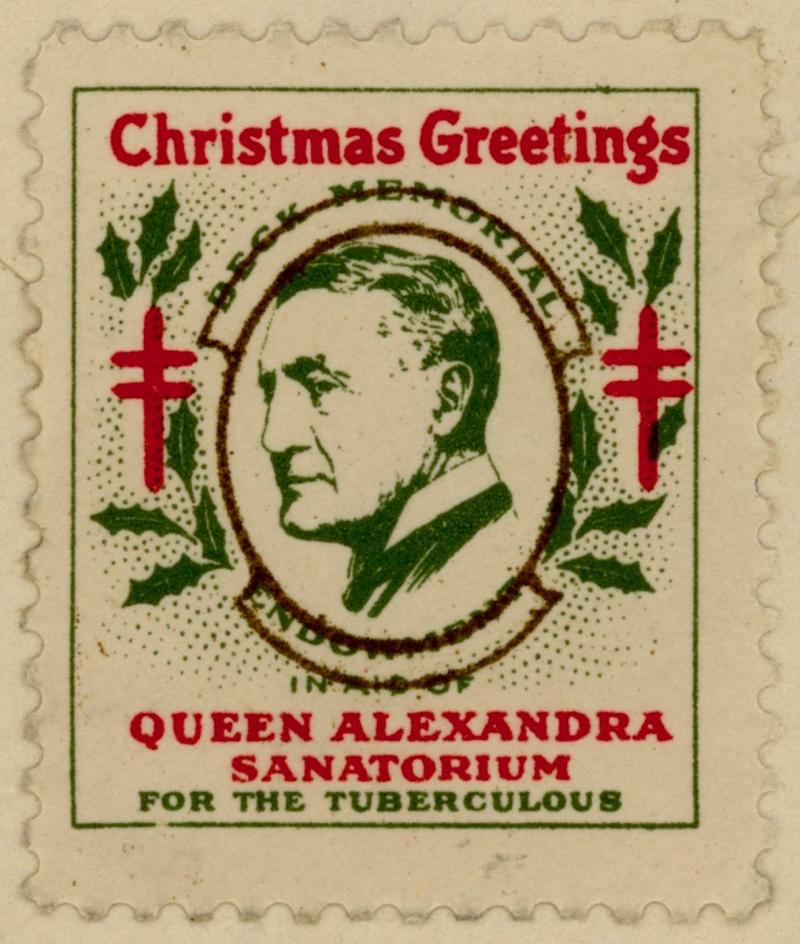
That is Adam Beck. His daughter suffered from tuberculosis and he and his wife invested considerable time into fundraising to build the Queen Alexandra Sanatorium, which opened in London, Ontario in 1910. In 1949 it was renamed the Beck Memorial Sanatorium.
Christmas seals were and are used to raise funds for charity, but they are not semi-postal stamps, which also raise funds for charity. The difference is the issuer - semi-postals are issued by the post office for use as postage and Christmas seals are not. Christmas seals are called Cinderella stamps. I don’t know if this Google explanation is accurate, but I do like it very much. “They are called “Cinderellas” because they are the “stepchildren” of philately - beautiful and similar to postage stamps, but not allowed to “attend the ball” (i.e., not listed in standard postage catalogues like Scott).”
The first Christmas seal appeared in Denmark in 1904, suggested by a postman. They were issued in the US in 1907 and Canada in 1908. The original Christmas seals were used to raise funds to build special hospitals for patients with tuberculosis. At the time, only the wealthy could afford treatment, but a disproportionate number of working class people were ill. In Canada, 61 hospitals had been built by 1938. After streptomycin was discovered in 1944 and provided free of charge across Canada, treatment changed. The last Canadian sanitorium closed in the 1970s.
You can read more about the history of Christmas seals in Canada at www.lung.ca .
The definitive reference for Cinderella stamps in Canada is The Field Guide to the Cinderella Stamps of Canada by Ronald G. Lafrenière, Bird Bear Press. The author passed away before completing the third edition, but his widow has promised the work will be finished. The third and final edition is expected to be published this year.
And if you’d like to know the difference between Sanitorium and Sanitarium - because historically, there is a difference - ask Google.

I don’t have a huge collection of these stamps yet, and it is always exciting to find an intact sheet! These are my first from South Africa, and Roy made them highly affordable.
Then Tony gave me a bag of slogan cancels, because he remembers me talking about them. It was a lovely selection that included these:
And then I was gifted a cover for Valentines, with this lovely fellow on the back:
That is Adam Beck. His daughter suffered from tuberculosis and he and his wife invested considerable time into fundraising to build the Queen Alexandra Sanatorium, which opened in London, Ontario in 1910. In 1949 it was renamed the Beck Memorial Sanatorium.
Christmas seals were and are used to raise funds for charity, but they are not semi-postal stamps, which also raise funds for charity. The difference is the issuer - semi-postals are issued by the post office for use as postage and Christmas seals are not. Christmas seals are called Cinderella stamps. I don’t know if this Google explanation is accurate, but I do like it very much. “They are called “Cinderellas” because they are the “stepchildren” of philately - beautiful and similar to postage stamps, but not allowed to “attend the ball” (i.e., not listed in standard postage catalogues like Scott).”
The first Christmas seal appeared in Denmark in 1904, suggested by a postman. They were issued in the US in 1907 and Canada in 1908. The original Christmas seals were used to raise funds to build special hospitals for patients with tuberculosis. At the time, only the wealthy could afford treatment, but a disproportionate number of working class people were ill. In Canada, 61 hospitals had been built by 1938. After streptomycin was discovered in 1944 and provided free of charge across Canada, treatment changed. The last Canadian sanitorium closed in the 1970s.
You can read more about the history of Christmas seals in Canada at www.lung.ca .
The definitive reference for Cinderella stamps in Canada is The Field Guide to the Cinderella Stamps of Canada by Ronald G. Lafrenière, Bird Bear Press. The author passed away before completing the third edition, but his widow has promised the work will be finished. The third and final edition is expected to be published this year.
And if you’d like to know the difference between Sanitorium and Sanitarium - because historically, there is a difference - ask Google.
Janet MacDonald: I found an unexpected love for stamp collecting during a pandemic …
